If you’re thinking about replacing your garden fence or installing a new garden gate, you might be wondering what the process actually involves. From removing old panels and preparing the ground to setting posts and securing everything in place, there’s more to a professional fencing installation than simply putting up a few new panels.
A well-installed fence can make a big difference to your garden. It can improve privacy, increase security, define your boundaries and give your outdoor space a much smarter appearance. However, the quality of the installation is just as important as the fencing materials you choose.
At DH Landscapes, we install quality garden fencing and gates for homeowners in Taunton and across Somerset. In this guide, we’ll walk you through what happens during a professional fence and garden gate installation, so you know what to expect when arranging your project.
1. Discussing Your Fencing Requirements
Every garden is different, so the first step is understanding what you want to achieve with your new fencing. Some homeowners want to replace old, damaged panels, while others are looking for additional privacy, better security or a complete change of style. You might also want to install a new garden gate to make access easier or create a more secure entrance to your property.
During the initial discussion, it’s important to consider the layout of your garden, the height and style of fencing required and any particular features you’d like to include.
There are several fencing styles to choose from, including traditional closeboard panels, Venetian fencing and more contemporary slatted designs. The right option will depend on your property, personal preferences and how you use your outdoor space.
2. Measuring Up and Assessing the Garden
Once you’ve discussed your requirements, the next stage is assessing the area where the fencing will be installed. Accurate measurements are essential to make sure the correct amount of materials is ordered and the finished fence fits the space properly.
The condition of the existing fence and the ground will also need to be considered. For example, uneven ground, changes in levels, existing concrete or difficult access can all influence how the installation is carried out.
If you’re installing a garden gate, its position and opening direction should also be considered. There needs to be enough clearance for it to open and close comfortably without catching on paving, grass or other garden features.
Taking the time to assess these details before work begins helps avoid unnecessary complications and ensures the installation is planned properly.
3. Removing Your Old Fence
If you’re replacing an existing fence, the old materials will usually need to be removed before the new installation can begin. This may involve taking down old panels, removing damaged posts and clearing away any concrete or other materials that could interfere with the new installation.
Some older fences may have posts that are firmly set into the ground, meaning removal can take time and care. It’s important to clear the area properly rather than simply fitting new fencing around existing problems.
Once the old fence has been removed, the installation area can be checked and prepared for the new posts and panels. A tidy, properly prepared working area makes the next stages much easier and helps achieve a professional finish.
4. Preparing the Ground and Installing Fence Posts
The fence posts are one of the most important parts of the entire installation. They provide the support needed to keep the fence upright, stable and secure.
Before installation, the ground needs to be checked and prepared. Post positions are measured and marked out to ensure the fence follows the correct line and the spacing works with the chosen panels.
Post holes are then dug to a suitable depth, taking into account the height of the fence, ground conditions and the manufacturer’s installation guidance where applicable.
The posts are positioned, checked for alignment and secured using an appropriate fixing method. Depending on the fencing system and site conditions, this may involve concrete or another suitable post-fixing solution.
Getting this stage right is essential. Posts that aren’t properly aligned or securely installed can cause problems later, including leaning panels, movement and damage during bad weather. This is one of the main reasons professional installation matters. A fence may look straightforward once it’s finished, but the work beneath the surface plays a major role in its long-term performance.
5. Fitting the Fence Panels
Once the posts are securely installed and ready, the fence panels or boards can be fitted.
The exact process will depend on the type of fencing you’ve chosen. Some systems use pre-made panels, while others are constructed using individual components.
Each section needs to be fitted carefully to maintain consistent spacing, height and alignment along the boundary. Where the ground slopes, the installer will also need to consider how the fence follows the changes in level. This attention to detail helps create a neat, consistent appearance across the entire garden.
If you’ve chosen a premium fencing system, following the correct installation instructions is particularly important. As a Jacksons Fencing Approved Installer, DH Landscapes understands the importance of installing approved fencing products in line with the manufacturer’s requirements. The result should be a fence that not only looks good but is properly supported and built to perform as intended.
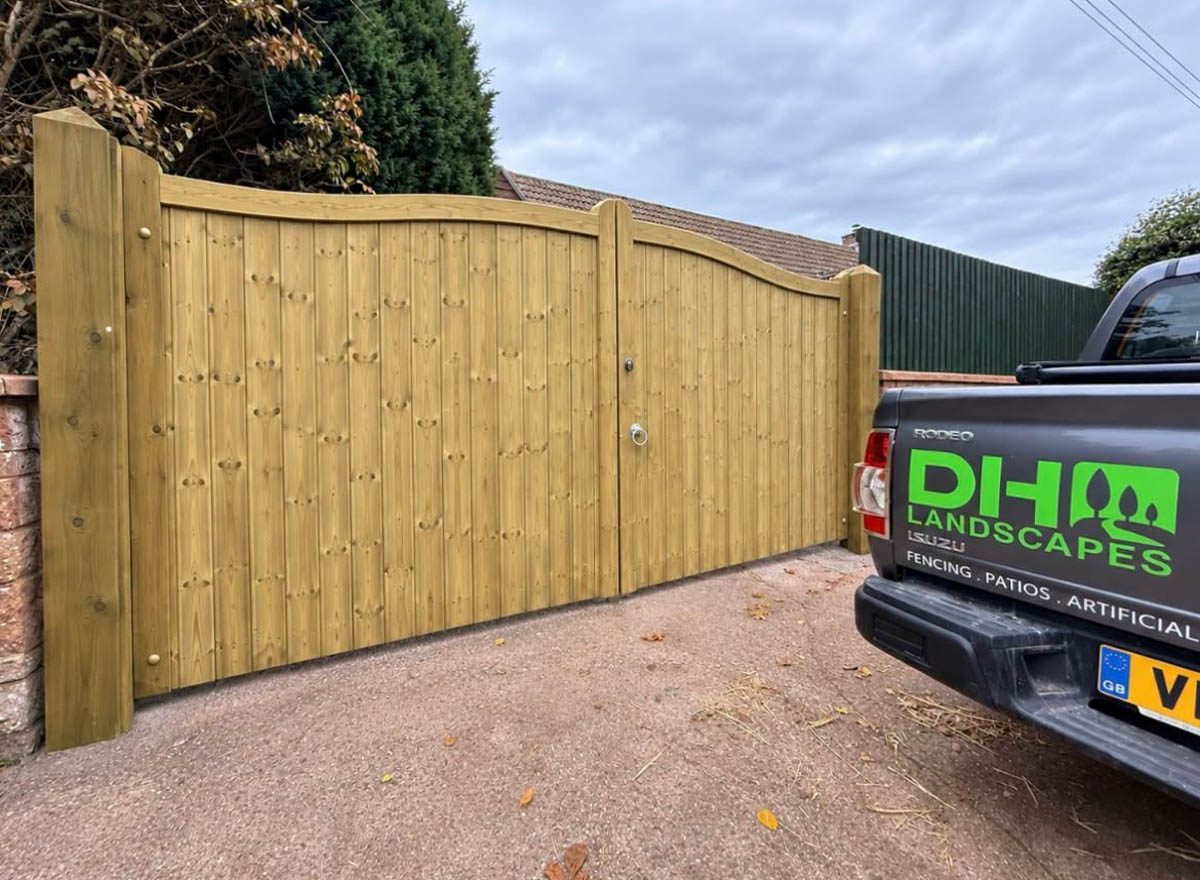
6. Installing Your New Garden Gate
A garden gate is a practical addition that can also improve the overall appearance and security of your garden.
Although it may seem like a relatively small part of the project, installing a gate correctly requires careful attention to measurements and alignment. The gate posts need to be secure enough to support the weight of the gate, while the hinges and fixings must be suitable for the design and intended use.
The gate also needs enough clearance to open and close without catching on the ground. This is particularly important if the entrance is on a sloped surface or connects to a paved area. Once fitted, the gate should be checked to make sure it opens smoothly, closes properly and sits neatly within its frame.
7. Final Checks and Finishing Touches
Before the installation is complete, the finished fence and gate should be checked to make sure everything is secure, aligned and working correctly.
This includes checking that the posts are stable, panels are properly fixed and the overall fence line looks consistent.
Any gates should be tested to make sure they open and close smoothly, with hinges, latches and other fittings correctly secured. The working area should also be tidied, with leftover materials and installation waste cleared away as agreed.
It’s worth taking a final look at the finished result to make sure it meets the original requirements and gives your garden the appearance and functionality you were hoping for.
Why Choose a Professional Fence Installer?
While installing a fence yourself might seem like a way to save money, getting the job right can be more difficult than expected.
Incorrect measurements, poorly secured posts and unsuitable materials can all lead to problems further down the line. A fence that isn’t installed properly may become unstable, particularly when exposed to the strong winds and wet weather we experience here in Somerset.
Using a professional installer means you benefit from experience, the right equipment and an understanding of how different fencing systems should be fitted.
It’s also important to consider the quality of the materials. Choosing a reputable manufacturer and having its products installed correctly can provide greater confidence in the finished result.
At DH Landscapes, we’re proud to be a Jacksons Fencing Approved Installer. Jacksons is known for its premium fencing systems, quality materials and long-term product guarantees on eligible ranges, subject to the manufacturer’s terms and conditions.
Combining quality fencing with professional installation helps you get the most from your investment.
Book Your New Fence and Gate Installation with DH Landscapes
A new fence or garden gate can completely change the look and feel of your outdoor space. Whether you’re replacing old, damaged panels, improving privacy or creating a smarter entrance to your garden, professional installation helps ensure the finished result is built to last.
At DH Landscapes, we have over 15 years of experience providing landscaping and fencing services in Taunton and across Somerset. With more than 30 five-star reviews and our Jacksons Fencing Approved Installer status, we’re proud to deliver quality workmanship and practical solutions for local homeowners.
If you’re considering new garden fencing or a gate, we’d be happy to discuss your ideas and help you find the right option for your property.
Get in touch with DH Landscapes today to arrange a free, no-obligation quote for your fencing project.